On 17 September 2026 the European Commission published a Proposal for an EU KIDS Act that seeks to strengthen the protection of minors in relation to certain digital services and AI systems, uphold the digital single market and maintain a coherent regulatory framework and enforcement structure for the protection of minors online.
The Proposal is still at an early stage in the legislative process but could have a significant impact on digital services providers, online platforms, gaming providers, app stores and AI-powered services, and certain chatbots. It remains to be seen how quickly the proposal will progress through the legislative process, as the European Commission is calling for swift adoption.
Summary of the Proposal for an EU KIDS Act
The EU KIDS Act Proposal introduces:
Social Media Delay
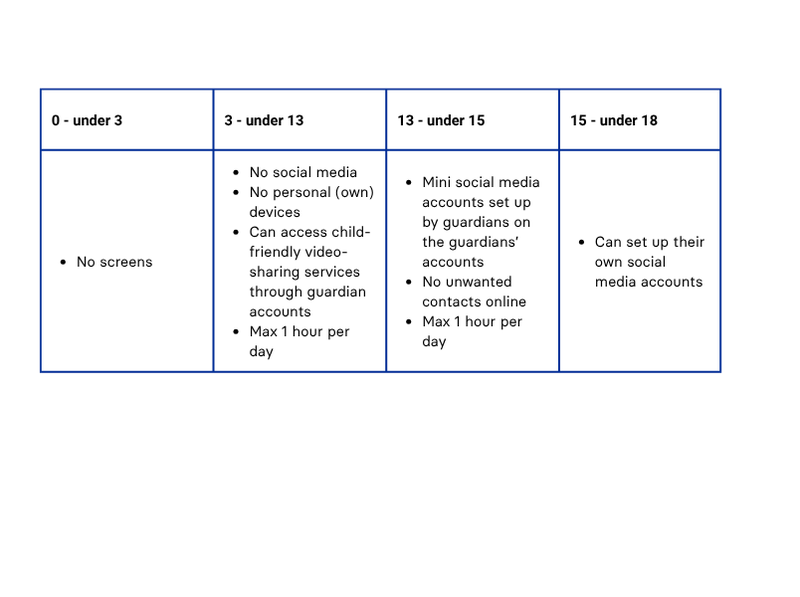
- Social media platforms would be prohibited from providing access to children under the age of 13.
- Sets an EU-wide minimum age for minors to open an autonomous account of their own at the age of 15, thereby ensuring a gradual approach.
- Children between 3 and under 13 cannot access social media, but they can access specially designed child-friendly video-sharing services through accounts managed by their guardian. For that purpose, the platforms need to offer parents or guardians an easy-to-use tool to restrict the use of the adult's device to such child-friendly services, when it is passed on to children, and limit the child's exposure up to a maximum of one hour per day.
Safety by Design
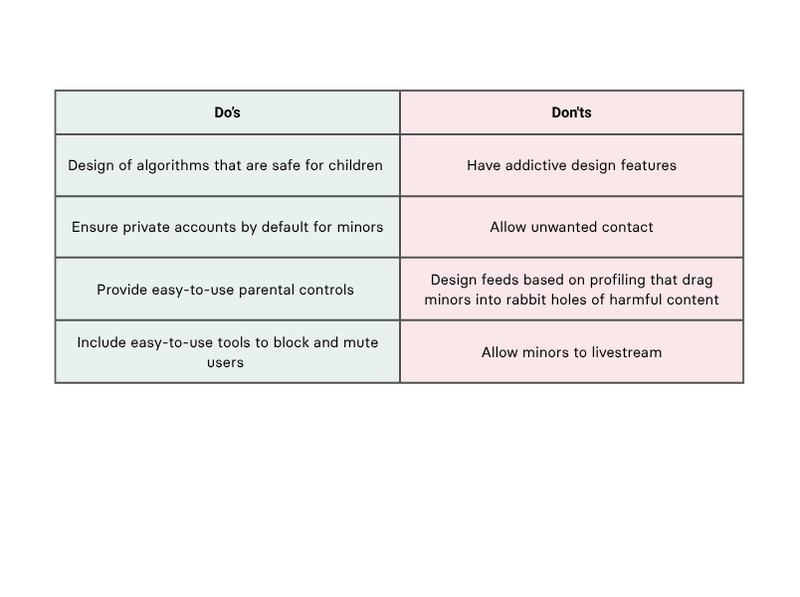
‘Safety-by-design’ obligations for providers of digital services used by children. This entails a clear list of do's and don'ts for social media, video-sharing platforms, online video games, AI companions and chatbots offering services to minors. The European Commission lists the following do’s and don’ts:
Age Assurance and Parental Responsibility
Platforms must use age assurance tools. For example, based on (third party) EU age verification solutions.
- 3 – under 13: Children may access age-appropriate games and video-sharing services exclusively through their parent/guardian owned/controlled account. This means no that autonomous seprate account may be created for or attributed to the minor.
- 13 – under 15: limited to parent/guardian created accounts with limited functionalities on video-sharing platforms and social media services and time restrictions
- 15 – older: Autonomous accounts without restrictions.
Reversed Burden of Proof
- The proposal reverses the ‘burden of proof', making the providers of very large online platforms (VLOPs) responsible for proving that their services are ‘safe by design' ex ante.
- The proposal introduces ‘fast-track’ enforcement procedures against providers in case of noncompliance with the EU KIDS Act, where the Commission should conclude investigations within 90 days.
- The enforcement framework builds on the structures already in place under the Digital Services Act and the Artificial Intelligence (AI) Act.
Feedback period
The Proposal for an EU KIDS Act is open for consultation from 1 October 2026 until 26 November 2026. Feedback can be submitted via this page.
Next steps
The Proposal will now follow the legislative procedure in the European Parliament and the Council. Given the complexity of issues such as age assurance, privacy and parental supervision, significant amendments may be expected before the rules are finalised.
Although the legislation is not yet final, potentially affected companies should already start assessing:
- Whether and which of their digital services may fall within scope.
- Existing mechanisms for age verification and parental controls.
- Product features that may require redesign or additional safeguards.
- The interaction with existing obligations under the Digital Services Act, DSA, AI Act and GDPR.
Nevertheless, the Proposal underlines a clear regulatory trend that providers of digital services used by minors should expect increased scrutiny of product design, safety features and age-appropriate user experiences in the coming years.
Companies affected should also consider how this interplays with other EU regulations and compliance strategies, such as existing consumer protection rules, privacy and data protection rules, the Digital Services Act, and the anticipated Digital Fairness Act proposal which is expected to be published in Q4 2026.
If you have any questions, please do not hesitate to reach out to our experts:
- Tosca Veniero-Bokhove and Jelle Blom: Consumer Protection and Unfair Commercial Practices
- Laura Poolman: Privacy and Data Protection
- Reindert van der Zaal: Media and Advertising


