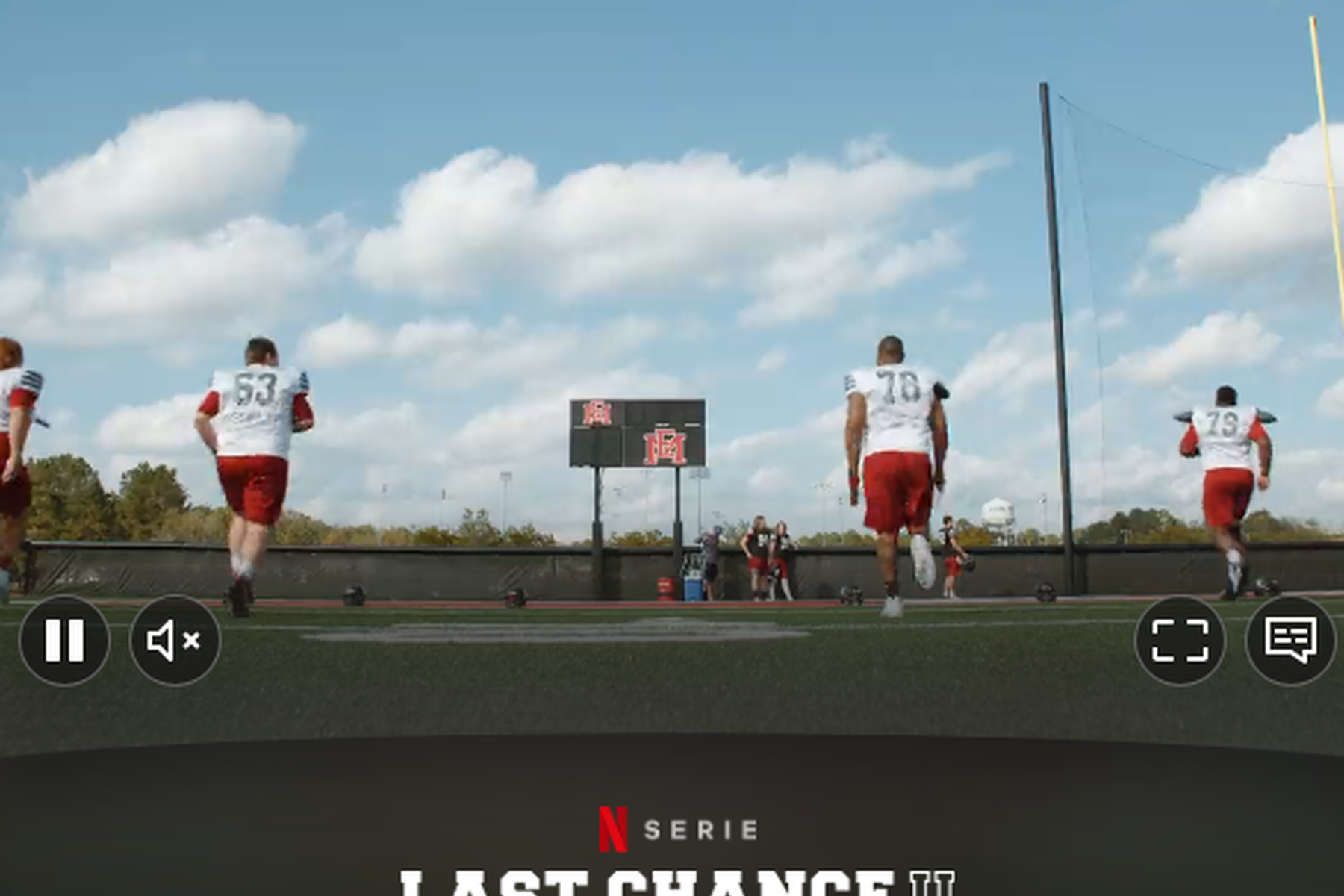
A double victory for Netflix, the production company Condé Nast and the executive producer of the series ‘Last Chance U’. They won the ‘free speech’ lawsuit that was brought by six former American Football players from the series. Better still, this victory was realised by the award of an anti-SLAPP motion.
Last Chance U is a reality series about junior college football players with troubled pasts who see top sports as a way to change their lives. Season one of the series was released in 2016 and was followed by four more seasons. Eventually the show ended in 2020. In the first few seasons, players of East Mississippi Community College were followed, in the two seasons afterwards, players of Independence Community College in Kansas, and in the last season players of Laney College in Oakland.
Earlier, the former coach of Independence Community College in Kansas brought a legal action against Netflix. He claimed $30 million in damages for infringement of his reputation by what he claims to be a misleading representation of him in the show. These proceedings are still pending.
In February 2025, when the first two seasons had been available on Netflix already for nine years, the six players of the East Mississippi Community College brought the action against Netflix, among other things. The players believed that their honour and reputation had been infringed by the way in which they were portrayed in the show. They also claim to have been misled and pressurized into participating in the show and giving away their rights. For example, they had allegedly been threatened with exclusion from the team or games if they would not participate, their fees were insufficient, and they did not have enough time to study the contracts carefully. Funnily enough, in this action $30 million in damages was also claimed.
Netflix submitted an anti-SLAPP motion. California (here: Los Angeles), where the lawsuit took place, has rather broad and therefore strong anti-SLAPP protection. An anti-SLAPP motion can be submitted by the party that relies on his or her freedom of expression in a legal action in the context of a public or socially relevant matter. Usually the motion is served in the early stages of an action, because if it is allowed, the lawsuit ends immediately. In addition, the claimant will also be ordered to pay all costs.
The Court pointed out the importance of the right to freedom of expression and the social importance of the series, which shows topics like trauma, poverty, origin and identity. Subsequently, it was up to the former American Football players to prove that their claim has a sufficient legal basis and is supported by evidence that justifies a ruling in their favour. They did not succeed:
“Here, plaintiff have failed to show any likelihood of prevailing on their claims against defendants, because their opposition consists entirely of argument, with no accompanying offer of evidence sufficient to support a favorable judgment.”
Finally, the Court still pointed out that all claims of the players have become time-barred, since they were brought nine years after the release. The Court dismissed the action against Netflix.


