In the run-up to the lawsuit against the Dutch State, in which Greenpeace Nederland wants to enforce a fair climate policy for the island of Bonaire, we spoke with Andy Palmen, the director of Greenpeace Nederland. Since the human dimension and social impact are deeply rooted in our DNA, we – the legal partner in this lawsuit – asked Andy about the key issues and the potential impact on environmental policy and regulations. Read more to find out about the reasons behind Greenpeace’s legal steps and the broader implications for the future.
By Joris Spuesens
Greenpeace about legal opportunities and support for the Bonaire case
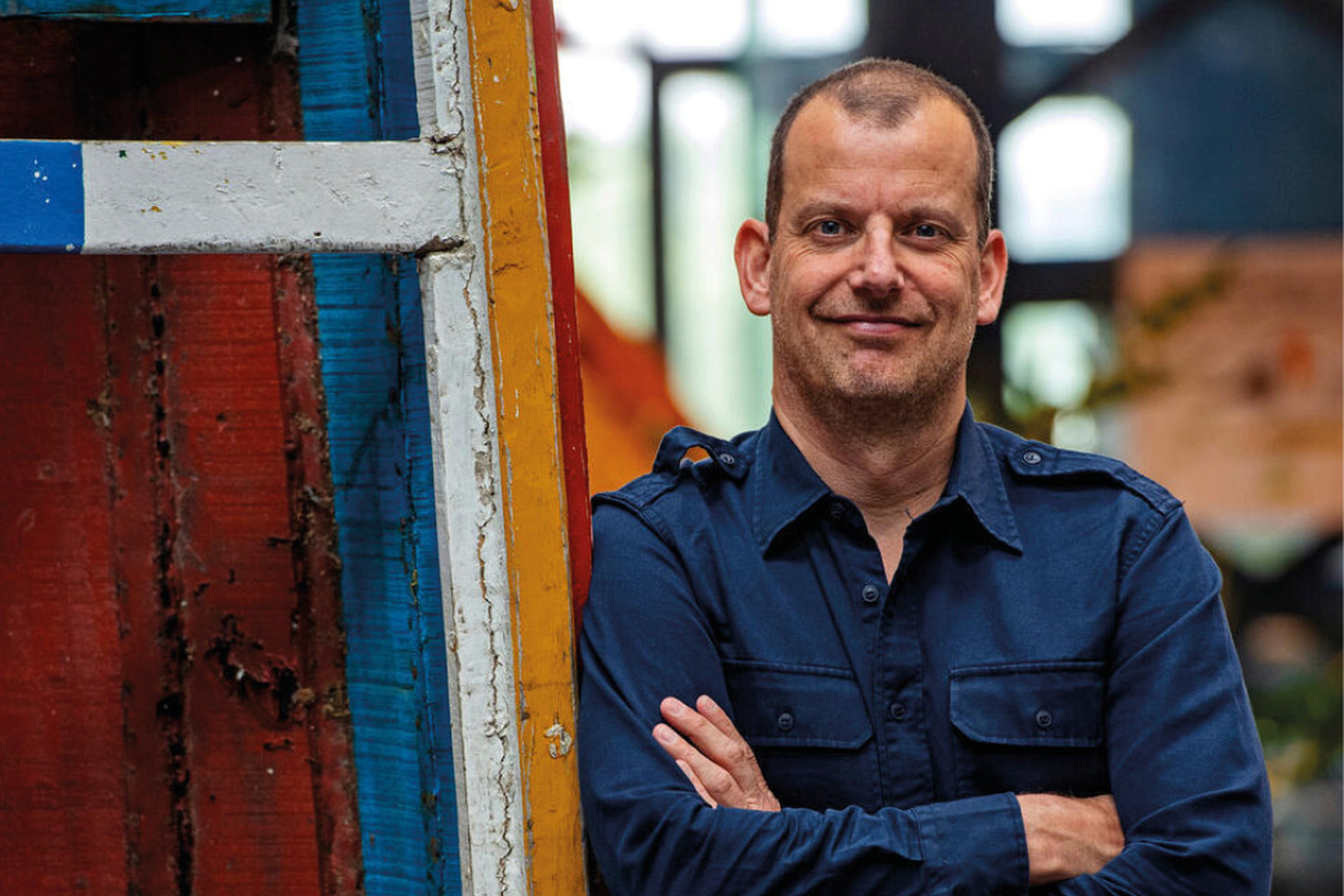
Andy Palmen, the director of Greenpeace Nederland, sees that climate change is now moving so fast that legal action is the necessary route towards a faster realisation of climate policies. “We have been talking with the government and the corporate sector for so long now, but we see covenants and voluntary arrangements are not producing sufficient results. A sharp acceleration is needed, which is why we resort increasingly to the legal route to enable people in threatened areas, like Bonaire, to enforce their human rights in court.”
Picture: © Marten van Dijl / Greenpeace
Following other high-profile lawsuits such as the Urgenda claim against the Dutch State, on 11 January 2024 Greenpeace Nederland summoned the Dutch State on the ground of a lack of climate policy. Greenpeace’s Andy Palmen thinks the time for talking is over and legal proceedings are inevitable. He previously worked at Milieudefensie, an NGO that, together with Greenpeace, won an earlier lawsuit against Shell.
According to Palmen, large firms endanger the living environment of local residents and governments endanger the lives of their citizens by postponing climate measures. “Especially firms like Tata Steel and Shell shift the detrimental effect of their operations on to society and taxpayers. With the legal support of Kennedy Van der Laan, we started this lawsuit against the Dutch State for their failure to offer Bonaire the same degree of protection as citizens in the European Netherlands.” For lawyers this is an important case, which can be compared to the case that was won by Urgenda in 2015.
On 25 September 2024, the Court ruled that Greenpeace is allowed to start the proceedings. Joost Linnemann, CEO of Kennedy Van der Laan, is pleased about this: “This allows us not only to lend concrete support to the Bonaire residents, but also to contribute to the development of law in the field of climate change. This is important, since where the legislator and the government fail to safeguard human rights, the courts, and consequently attorneys, have a role to play. We consider it our social duty to pick up this role.”
What is climate justice?
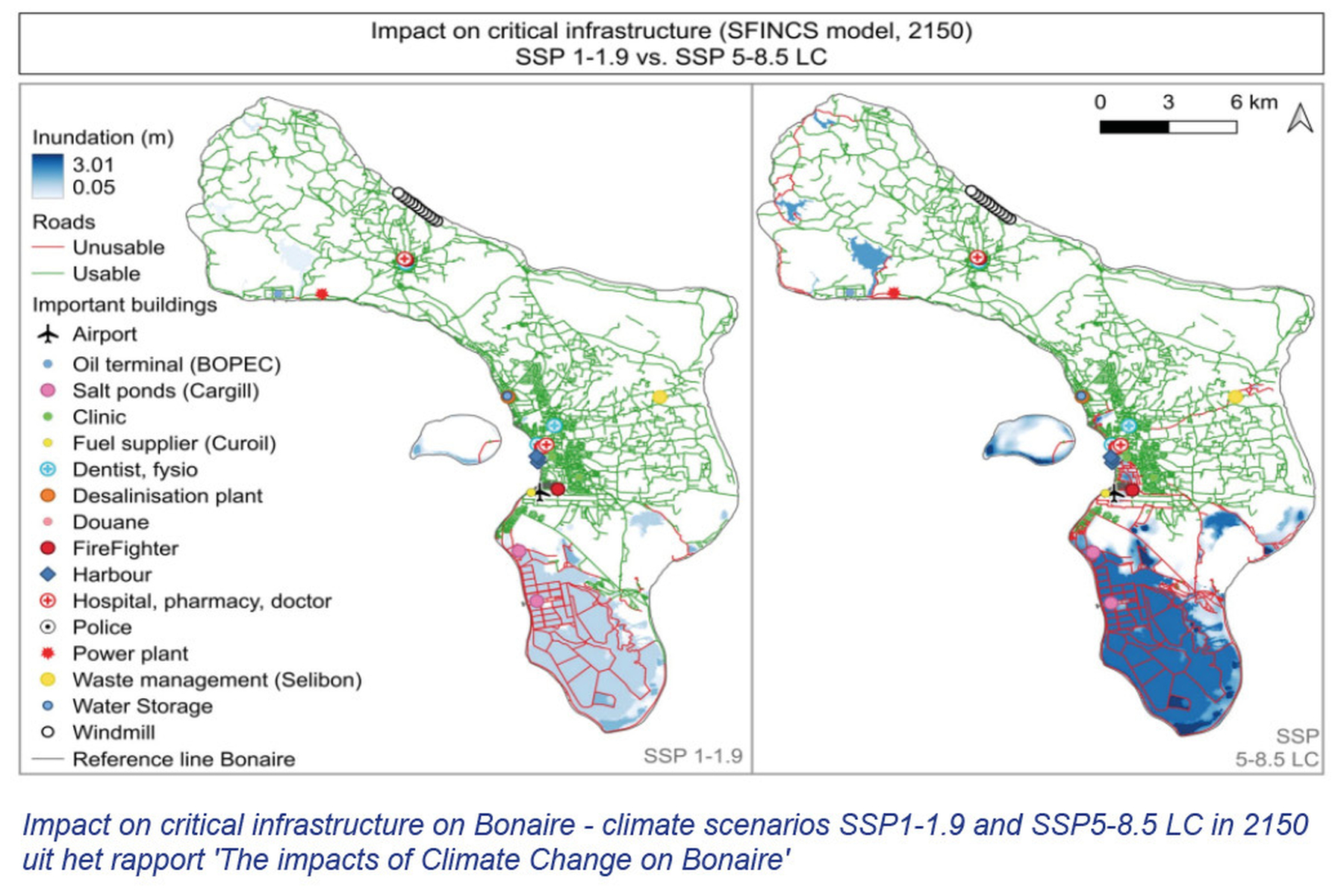
Palmen: “To us, climate justice means that the right to protection of citizens applies in all Dutch municipalities. However, as an overseas municipality Bonaire is given little attention. In the end, failing to act there now will be more expensive than making repairs. Unless we reduce the emission of greenhouse gases drastically, one-fifth part of Bonaire threatens to be lost to the sea before the end of this century. In our opinion, all solutions to be implemented must be supported by the local residents. Greenpeace has community mobilizers working on Bonaire, who convey to us the concerns about climate change from the heart of the Bonaire society. We have supplied the scientific substantiation that confirms these concerns. We have instructed VU University Amsterdam to prepare a report that has had an enormous impact on the island.”
How does Greenpeace find the balance between activism and looking for a solution by continuing talks? “We have been consulting with ministries for years now, but have noticed that they are not establishing sufficient climate policies with concrete measures to protect the citizens of Bonaire. We were able to fund and to publish the report that describes meticulously what people on Bonaire are physically experiencing and witnessing because of climate change. With scientific substantiation, we demonstrate that the extremes are increasing.”
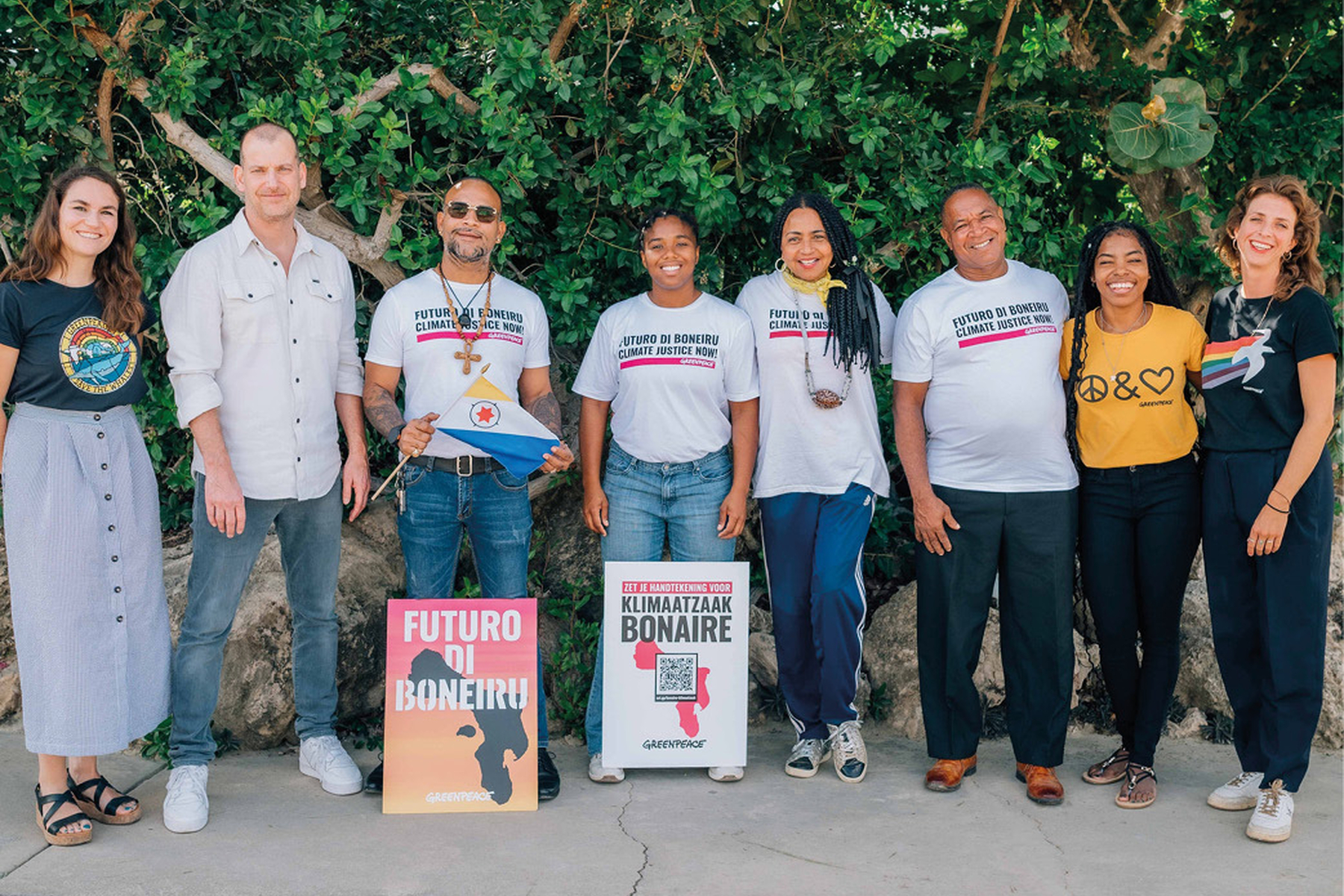
Picture: © Roëlton Thodé / Greenpeace
For example, climate change causes the sea level to rise, the risk of floods to grow, and Bonaire’s coastline to change dramatically. More extreme scenarios for 2150 include the inundation of Kralendijk, which will render the airport and the fire station inaccessible. The researchers found that floods may also damage the police station and medical aid stations.
Palmen: “Twenty percent of Bonaire could be submerged; the increasing heat causes coral reefs to die and threatens the tourism sector. A greater number of hurricanes – occurring mostly on the Windward Islands – pose a direct threat to Dutch citizens. The people of Bonaire have the human right to live safely and protect their own history. Not only their culture, but also food supply is under pressure. In short: for the citizens of Bonaire climate change may be live-threatening”, Palmen says.
Government/NGOs and companies need each other for climate targets
While Palmen understands that the government, Greenpeace and companies need each other to achieve climate targets, he also thinks that the time has come to step up the pressure on the government and companies: “We have always combined activism and lawsuits with consultations. We keep talking with ministries, but after decades of already knowing about climate change, we have become more sceptical about consultations with the government. The same goes for other business operations that affect the climate, such as agriculture, for which policies are still not effective. This problem has been existing for nearly forty years now. We believe that this topic needs to be assessed in court. On 12 November 2024 we will therefore begin proceedings on the merits about the nitrogen policy.”
Do we need a complete revolution?
We no longer have enough time to achieve the climate goals with individual reports, lesson packages and other methods. We need a complete revolution.
Greenpeace intends to request judicial rulings ever more often in order to accelerate the transition towards a more climate-proof economy. Palmen: “The Urgenda case and the Shell case are examples of successful lawsuits that were brought by NGOs to accelerate climate measures. Still, Palmen finds that too little has been done yet in practice. “Companies will only take action if policies can be enforced by law and there is a prospect of penalty payments or criminal offences.”
According to Greenpeace, one lawsuit is not enough to achieve climate justice and a complete revolution. “But it is an important tool for achieving our goals,” Palmen maintains. “Thousands of court cases are already being conducted all over the world. In the Netherlands too, the climate movement is pursuing several such cases. Some are administrative law cases at a very local level and directed against bad permits; others are criminal cases against directors or sometimes individual companies. If we win, our case will definitely make a big difference, but all those other cases are also necessary to protect citizens and to bring about a revolution towards a sustainable society.”
He continues: “We are running out of time to achieve the climate targets through individual reports, teaching packages and other methods. What we need is a complete revolution. Reports and voluntary quality marks are often too weak and may also be used by companies to hide behind. We need a strong government that enforces climate measures. We have stopped believing in covenants and voluntary arrangements. Enforceable policies and criminal law are required to make directors personally liable for the damage (to health) that their companies cause. Both Tata Steel, with its emissions of heavy metals, and Chemours, with its discharge of PFAS, have known for decades that their pollution is damaging the health of local residents as well as employees. We are not naive or credulous. We are in a massive hurry.”
Will measures like CSRD and CSDDD contribute to climate targets?
New reporting obligations, such as the Corporate Sustainability Reporting Directive (“CSRD”) that entered into effect on 5 January 2023, modernise and reinforce rules for social and environmental information that companies are obliged to report. The Corporate Sustainability Due Diligence Directive (“CSDDD”) supplements this requirement of transparency by substantive sustainability requirements. This proposal for a directive offers a further framework for the obligations and has ‘teeth’, which are meant to encourage compliance by undertakings through liabilities and the option of sanctions.
Palmen: “In any case, doing nothing will always be more expensive. At present, the costs are being shifted on to society, and consequently to the taxpayers. These costs do not go to the polluters, who should be the ones to pay. As far as we are concerned, reporting obligations should be made subject to penalties. We still have to calculate how high such penalties should be.”
Who pays the bill of climate measures?
“As an environmentalist movement, we join forces with trade unions, like FNV, in order to prevent the interests of employees from becoming opposed to those of climate activists. Some companies are trying to paint the picture that climate measures are prohibitively expensive and that we are jeopardising employment, but in fact environmentalists and trade unions are fighting the same battle: we want to have an economic system in which profits do not only go to shareholders and top earners, while the losses are shifted on to society. This is done via low wages for employees who earn too little to afford proper housing and to bring up their children. We do not want to be played off against each other.”
Sustainability creates employment
Palmen concludes: “Employment is not contradictory to the environment. Companies that do not take steps towards sustainability now will eventually lose from competitors that do. I think there is a general consensus about this, but the pace needs to be stepped up; then everyone will see that sustainability also creates employment.”
About Andy Palmen
Andy Palmen has been working at Greenpeace since 2015, including 8 months as an interim director. Since 19 July 2021 he has been the director of Greenpeace. He previously worked as head of department and campaign leader. Earlier, he held senior management positions at a development agency and Milieudefensie.


